
 Itamar Feldman
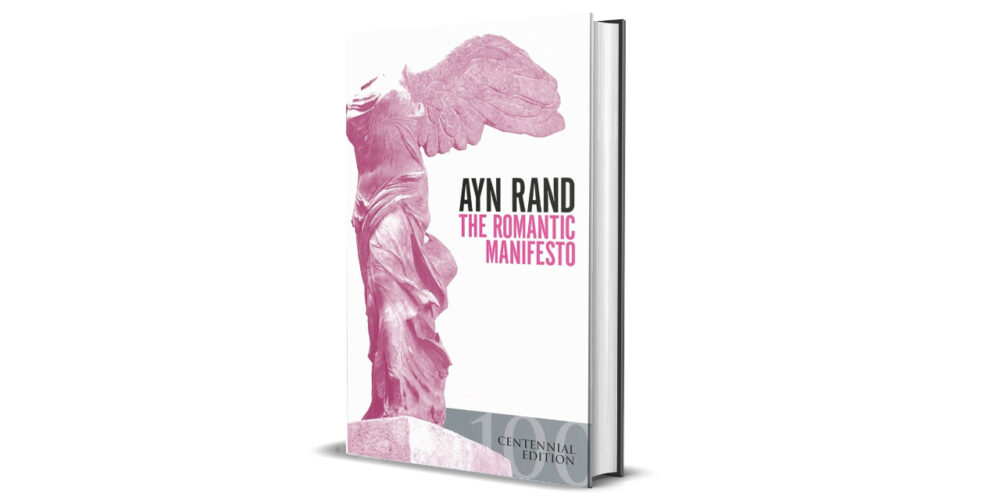
As a novelist and a philosopher, Ayn Rand held that Romantic art, especially literature, is vital to the formation of man’s moral character. In her 1965 essay “Art and Moral Treason,” Rand explores the distinctive human need for Romantic literature and shows how modern culture works to undermine it. Sixty years after its original publication, ARI is proud to announce that it has arranged with publishers to make this important essay available online for the first time.
In Rand’s analysis, while Romantic art teaches man to associate morality with values, heroism, and pleasure, the culture — today as in her time — teaches him to associate it with sacrifice, commandments, and pain. A child who admires fictional heroes is often met with cynicism and told that “life is not like that!” or urged to “come down to earth!” Modern culture suppresses his moral ambition.
The essay can help one recognize how one’s own idealism might have been blunted — and suggest how to begin re-nurturing it. It offers a powerful, positive account of the value of Romantic art, and in particular, it shows why morality cannot be learned solely from abstract discussions, without experiencing the concrete embodiment of a moral life in the form of a Romantic hero.
You can read the full essay here, or in Rand’s book The Romantic Manifesto.
Find a passage from the beginning of the essay below.
When I saw Mr. X for the first time, I thought that he had the most tragic face I had ever seen: it was not the mark left by some specific tragedy, not the look of a great sorrow, but a look of desolate hopelessness, weariness and resignation that seemed left by the chronic pain of many lifetimes. He was twenty-six years old.
He had a brilliant mind, an outstanding scholastic record in the field of engineering, a promising start in his career — and no energy to move farther. He was paralyzed by so extreme a state of indecision that any sort of choice filled him with anxiety — even the question of moving out of an inconvenient apartment. He was stagnating in a job which he had outgrown and which had become a dull, uninspiring routine. He was so lonely that he had lost the capacity to know it, he had no concept of friendship, and his few attempts at a romantic relationship had ended disastrously — he could not tell why.
At the time I met him, he was undergoing psychotherapy, struggling desperately to discover the causes of his state. There seemed to be no existential cause for it. His childhood had not been happy, but no worse and, in some respects, better than the average childhood. There were no traumatic events in his past, no major shocks, disappointments or frustrations. Yet his frozen impersonality suggested a man who neither felt nor wanted anything any longer. He was like a gray spread of ashes that had never been on fire.
You can read the full essay here, or in Rand’s book The Romantic Manifesto.
 Ricardo Pinto