
 Brandon Lisi
In 2025, the Ayn Rand Institute premiered several rarely heard recordings of Ayn Rand’s talks and interviews, giving audiences the chance to hear her voice and ideas as they haven’t been heard in decades.
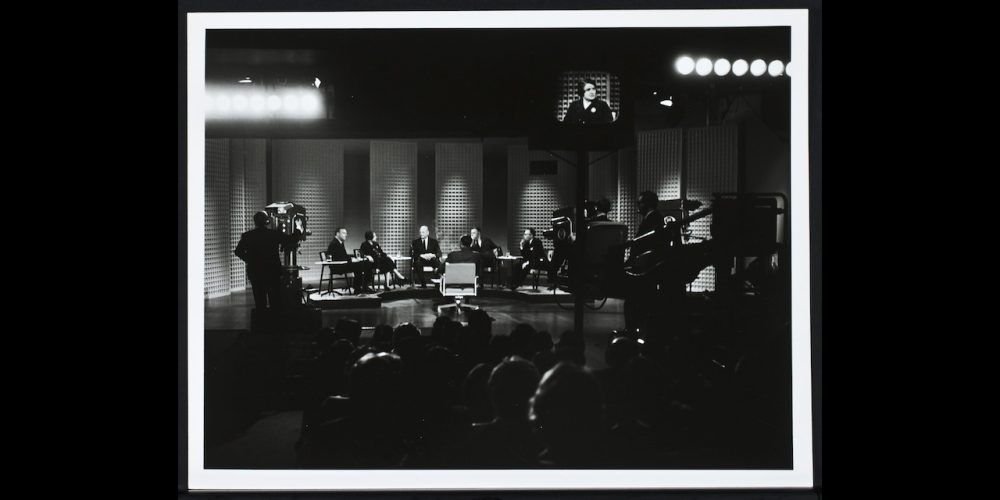
A breakthrough came with the search for Ayn Rand’s missing appearances on The Mike Wallace Interview. The 1959 broadcast is well-known — now boasting over 2.2 million YouTube views — but her 1960 and 1961 appearances were thought lost. For years, ARI’s Archives held only a degraded, partially unintelligible audio copy of the 1960 show, likely taped off a television speaker.
Determined to find better versions, ARI archivists traced leads to the Mike Wallace Papers at Syracuse University, where they uncovered several undated reels labeled “The Mike Wallace Interview: Ayn Rand.” One might have assumed these to be duplicates of Rand’s 1959 interview, but because they knew of the two missing interviews (thanks to Rand’s calendars and contemporary TV listings from the New York Times), ARI immediately requested the digital files. The Archives team was astonished to discover that the files contained high-quality recordings of both the 1960 and long-missing 1961 recordings.
A clip from the 1961 interview was debuted publicly during ARI CEO Tal Tsfany’s keynote, “Spreading Objectivism: A Vision for ARI’s Future,” at the 2025 Objectivist Conference — its first known airing since April 14, 1961.
The year also saw other archival successes. On February 2 — Rand’s 120th birthday — ARI released her 1980 interview with radio host Raymond Newman, one of her final public conversations before her death. Previously available only in low fidelity, unauthorized copies, ARI brought the hour-long exchange to YouTube for its first officially licensed online release.
Then on September 2nd (a date of recurring significance in Atlas Shrugged), ARI held another online event to debut a rare, newly acquired recording of Rand’s 1964 Ford Hall Forum talk, “Is Atlas Shrugging?” Between 1961 and 1981, Rand appeared at the Forum nineteen times, engaging audiences with lectures and impassioned Q&As. Until recently, only a poor-quality recording of this particular talk was available to the public. This version was also missing the opening minutes of Rand’s presentation. But ARI archivists discovered a complete, high-fidelity recording from the Boston Public Library, allowing Rand’s 1964 talk to be heard clearly for the first time in sixty years.
According to Don Watkins, ARI’s vice president of Fundraising and Marketing, what makes these releases especially powerful is their ability to connect with new audiences in a way that no secondhand account ever could. “Rand herself is the best introduction to her philosophy. This audiovisual content showcases Rand’s direct and uncompromising philosophical views, her sharp wit, and her intellectual clarity, all of which come through as vividly now as they did decades ago.”
But the Ayn Rand Archives is not stopping here. They are actively chasing down leads on more than fifty of Rand’s radio appearances, as well as additional Ford Hall Forum audio to supplement what has already been found at the Boston Public Library. As of this writing, several of Rand’s Q&As at the Forum, as well as talks at various universities have yet to be uncovered and published. Each new find requires months of work — locating, licensing, restoring, and preparing the recordings for public release — and is made possible by ARI’s donors. Supporters also enjoy early access through private donor roundtables or screenings at OCON. Their contributions not only preserve Rand’s voice but ensure it continues to speak powerfully to generations ahead.

 NI Staff
 Agustina Vergara Cid