
 Sam Weaver
America’s elite private universities are at a crossroads. After the administration abruptly suspended their federal research grants, it is now dangling restored funding in exchange for policy concessions.
Some have already capitulated. Columbia, Brown and UPenn agreed to nine-figure settlements and conditions, such as excluding transgender athletes from women’s sports and allowing external oversight over admissions data. Columbia even accepted scrutiny over its Middle East studies curricula and a mandate to hire professors to create intellectual diversity. Others, like MIT, have refused similar compacts. Still others, like Harvard, are locked in battles over blocked funding.
But universities and their supporters shouldn’t simply resist Trump’s pressure. They should advocate phasing out altogether the source of that pressure: federal funding. Although radical, only this step would safeguard intellectual freedom.
Private universities have long maintained that they can take government money without compromising their independence. If the funding doesn’t come with restrictions on teaching or research, how could it hurt?
But federal funding has always brought forms of control. Some controls seemed necessary to prevent manifest injustice: institutions receiving federal funds could not discriminate against racial minorities. This established a precedent that would be used to justify more contentious controls.
For example, the Obama administration’s 2011 “Dear Colleague” letter demanded that universities handle sexual assault accusations by strongly favoring accusers, even when the evidence was weak. Advocates wanted to protect sexual assault victims from sexual violence, which the letter characterizes as a form of discrimination. But others reasonably objected to forcing the universities to unfairly presume the guilt of the accused.
Now the Trump administration claims that allowing transgender women into women-only spaces discriminates against biological women. Critics argue that the Trump demand discriminates against the transgendered.
So administrations from both parties have used federal funding as leverage to get universities to adopt highly contentious policies.
There are also subtler forms of control inherent in federal research funding. The government funds only certain initiatives, and universities deprioritize research topics that don’t bring in funding. So when Katalin Karikó has her grant applications rejected repeatedly, UPenn may deny her promotions and refuse her supplies. Karikó has gone on to become one of the pioneers of mRNA vaccines, but the federal grant process substantially delayed this achievement.
The government doesn’t compel private universities to research anything or forbid them from privately funded research. But incentivizing research with tax dollars is still a mechanism of control. It compromises intellectual freedom by creating an inevitable conflict between universities and the taxpayers who are compelled to foot the bill. Here’s why.
Universities would prefer that the government attach as few strings as possible to its funding. But then taxpayers would be unjustly compelled to “donate” to universities without the intellectual freedom that private donors have to judge which ones are worth supporting.
Attaching strings to government funding gives taxpayers a voice. It might prevent their having to fund universities with highly controversial policies, curricula or research topics. This would reduce how much taxpayers were forced to violate their own convictions. Reduce — but not eliminate. Taxpayers who disagree with majority preferences would still be compelled to contribute.
Government funding also deprives taxpayers of funds that could otherwise support less popular research rejected by the government — like Karikó’s mRNA research.
As long as government funding is in place, we can’t protect everyone’s intellectual freedom.
To undo this conflict, a radical solution is needed. Private universities and their allies should advocate the phasing out of all federal funding — gradually, so that institutions are able to adopt new funding models
Institutions that could immediately lose funding may still have reasons to take a deal. But they should not take it without speaking out about the importance of eventually eliminating government funding to safeguard intellectual freedom.
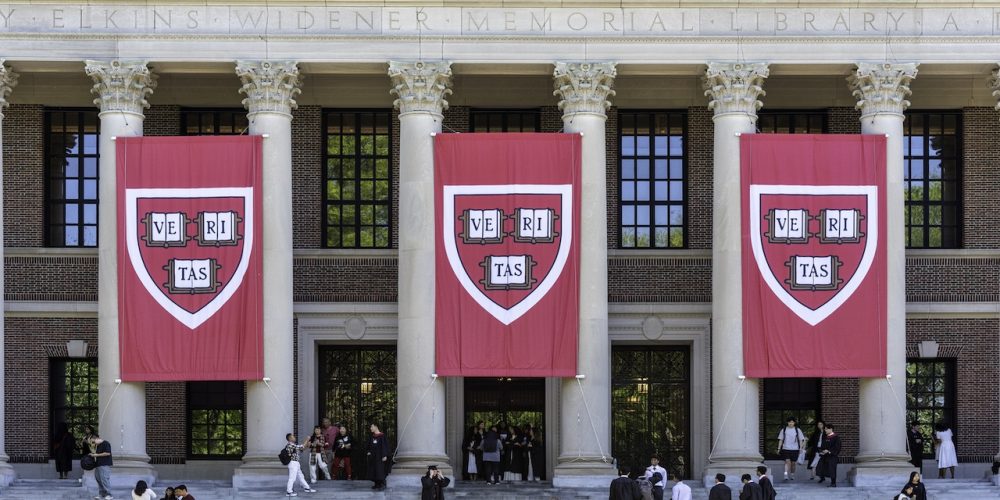
Well-funded universities, however, should consider taking a stand now to dramatize that federal money is not worth their independence. Harvard, for example, has an endowment of more than $50 billion and one of the most prestigious names in higher education. Imagine the impact they could make by flatly rejecting the deals.
Full private funding is more feasible than one might expect. Some universities already do it. Hillsdale College has never accepted federal funding, relying instead on supporters of its conservative orientation. The new University of Austin just received a $100 million donation from Jeff Yass on the condition that it refuse all government funding. And many distinguished liberal-leaning institutions might garner support from wealthy liberal donors by taking a stand against Trump.
It’s worth taking a stand for intellectual freedom in higher education. But to do so, we must challenge the long-standing federal funding system that undermines it.
Image credit: Steve Rosenbach / iStock Editorial / via Getty Images

 Ricardo Pinto
 NI Staff